

Algebra 1 Unit 2 Test
What Are Some Fun Facts Most Algebra?
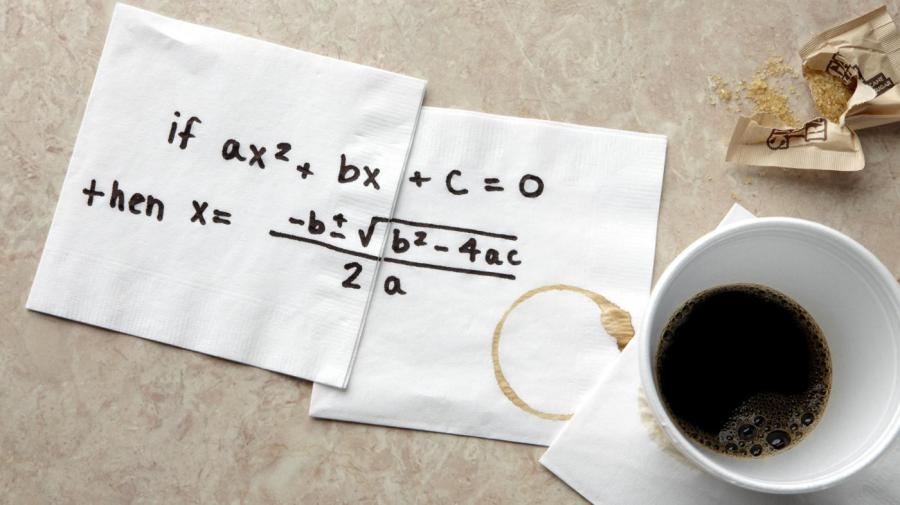
One interesting fact about algebra is that the name originated from the Arabic give-and-take "al-jabr." Its history began in aboriginal Egypt and Babylon. The Persian mathematician Muhammed ibn Musa Al-Khwarizmi is credited equally one of the forefathers of algebra.
The precise meaning of the give-and-take "al-jabr" eludes historians, although most agree that it was closely related to the word meaning "restoration." The word comes from a treatise written in 820 A.D. by Muhammed ibn Musa Al-Khwarizmi, which provided for the systematic solution of linear and quadratic equations.
Algebra did not always brand use of the widespread symbolism that is ever-present in math as of 2014. It underwent 3 singled-out stages that are known as "rhetorical algebra," "syncopated algebra" and "symbolic algebra." Algebra emerged as a branch of mathematics towards the end of the 16th century, with French mathematician Francois Viete as a driving force. He and his successors promoted the formalization of algebra, creating something known equally the "new algebra" or "symbolic assay." It marked the showtime of algebraic formalization.
Algebra, in its most general form, is the study of symbols and the rules for manipulating symbols. The almost basic parts of algebra are called "uncomplicated algebra," and the more abstruse parts are called "abstract algebra" or "modern algebra." A mathematician who does enquiry in algebra is called an algebraist.

Algebra 1 Unit 2 Test,
Source: https://www.reference.com/world-view/fun-algebra-7586677a4e202ab7?utm_content=params%3Ao%3D740005%26ad%3DdirN%26qo%3DserpIndex&ueid=9d77705e-5da1-4a3b-a47a-137aa7eaffbd
Posted by: lealnessiogs.blogspot.com
0 Response to "Algebra 1 Unit 2 Test"
Post a Comment